
Author
Ronin


About This Article
About 48% of Americans get less magnesium from food and drink than their estimated requirement, according to NIH data. That gap explains why supplements like Magnesium Breakthrough appeal to people with sleep and stress worries. The catch is that studies test magnesium in general, not this product. Below, seven possible benefits are graded by evidence, followed by dose and label checks and current price tiers.
Why Magnesium Matters
Magnesium is an essential mineral. The NIH recommends 400 to 420 mg a day for adult men and 310 to 320 mg for adult women.
Early deficiency signs are loss of appetite, nausea, fatigue and weakness. None points specifically to poor sleep or stress, and blood tests poorly reflect total body stores, so deficiency is hard to self-diagnose. Higher-risk groups include older adults, people with gut diseases such as Crohn's or celiac disease, people with type 2 diabetes, people with alcohol dependence, and people taking diuretics or proton pump inhibitors.
Check Out: All live BiOptimizers coupon codes and offers
What Is in Magnesium Breakthrough
BiOptimizers' product page lists seven forms: chelate, glycinate, malate, citrate, orotate, a Sucrosomial form, and taurate. Two capsules supply 500 mg of elemental magnesium, plus vitamin B6.
The page calls it "the most complete blend available," which is marketing, not a comparison study. Its absorption claims rest on in-house testing with no data shown. The NIH notes only small studies, which found citrate better absorbed than oxide, and the product page itself labels its Sucrosomial form as magnesium oxide. We found no independent data showing this blend absorbs better than other forms.
Seven Possible Benefits, Graded
- Covers a common dietary gap. Evidence: strong. With nearly half of Americans below their requirement, a supplement can close the shortfall. This corrects intake. It does not push you above normal.
- Better sleep. Evidence: mixed. A review of nine publications covering 7,582 people, summarized by Examine, linked higher magnesium to better sleep, but those studies cannot show cause. Of the controlled trials, one in 46 older adults taking 500 mg for eight weeks improved sleep, and four found no significant benefit.
- Lower anxiety. Evidence: limited. A 2017 review of 18 studies found positive effects in four of eight anxious samples. Its authors called the evidence quality poor, and several positive studies combined magnesium with other ingredients.
- Lower stress. Evidence: thin. The same review found no study using a validated measure of subjective stress. Claims about a "calm, balanced stress response" lack direct support there.
- Premenstrual symptoms. Evidence: limited. Four of seven PMS studies in that review reported benefits, with the same quality problems.
- Blood pressure. Evidence: small. The product page itself says the effect is clinically small, under 2 mmHg.
- More benefit if you are low. Evidence: our inference. People in the higher-risk groups above have the most room to benefit, and a doctor can check whether you are one of them.
Also Read: How to Save on BiOptimizers supplements
Check the Dose and the Label
One serving is 500 mg of elemental magnesium. The NIH sets the upper limit for supplemental magnesium at 350 mg a day for adults. Above it, diarrhea, nausea and cramping are common, and reduced kidney function raises the risk of serious toxicity. The limit covers supplements, not food. Ask a doctor or pharmacist before taking the full serving, especially with kidney disease or regular medication.
For any magnesium product, check four things:
- A named third-party lab. The page shows quality badges but names no lab, and calls its absorption testing in-house.
- A clear dose per form. The page does not split the 500 mg by form.
- Claims that match the evidence. Trials on magnesium are not trials on a product.
- Return terms. BiOptimizers accepts unopened bottles within 365 days; see our [BiOptimizers savings guide](URL to confirm) for the price math.
Magnesium Breakthrough clears the first bar of a full label and a stated elemental dose. It falls short on a named lab and per-form amounts.
Check Available Magnesium Breakthrough Offers on GetTopDiscounts
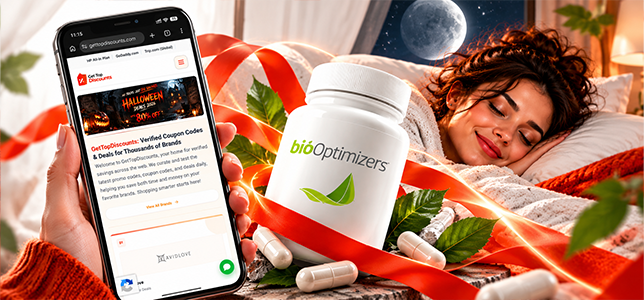
On BiOptimizers' product page, a 60-capsule bottle lists at $39.99, three bottles at $102.00, and five at $160.00, with an extra 12% for subscribers. Review the Magnesium Breakthrough offers on GetTopDiscounts, compare any code with those tiers, and read the refund terms first. No code is guaranteed to apply.
Conclusion
Magnesium can fix a real and common shortfall, and the sleep and anxiety research is interesting but thin. Magnesium Breakthrough is a high-dose, multi-form option whose absorption claims lack independent data. Check the dose with a clinician, treat benefits as possible, and compare official price tiers before chasing codes you cannot verify. Prices change, so confirm them on bioptimizers.com.
Disclosure: GetTopDiscounts may earn a commission if you use links on this page, at no extra cost to you. Research was done on October 27, 2026. This article is educational, not medical advice.
Frequently Asked Questions
1Can I take the full serving every day?
2When should I take it for sleep
3How long does it take to work?
4Can it upset my stomach?
5Can I take it with prescription drugs?
6Is it safe for children or during pregnancy?